
'%3e%3cpath%20d='M9.54052%2017.2194C8.37423%2015.2498%207.27109%2013.3834%206.16795%2011.5184C5.64062%2010.6275%205.09272%209.75045%204.5933%208.84415C3.78394%207.37776%204.1776%205.76364%205.51723%204.91273C6.80251%204.09568%208.35072%204.48343%209.21737%205.87597C9.88278%206.94538%2010.5144%208.0394%2011.1431%209.13343C11.337%209.47195%2011.4692%209.62582%2011.8511%209.31192C12.5855%208.70567%2013.4463%208.57026%2014.3365%208.87031C14.6376%208.97186%2014.7786%208.858%2014.9475%208.64258C15.7378%207.6301%2016.7293%207.27005%2017.9411%207.67011C18.2143%207.7609%2018.3642%207.65472%2018.5492%207.42392C19.8712%205.77288%2022.0643%205.89443%2023.0881%207.76397C24.557%2010.446%2026.0332%2013.1372%2027.2891%2015.9315C29.6232%2021.1262%2025.9319%2027.5503%2020.4617%2027.9827C18.9781%2028.0996%2017.6282%2027.6119%2016.3106%2026.9564C12.9425%2025.2807%209.56403%2023.6281%206.19292%2021.9602C5.60977%2021.6724%205.10741%2021.277%204.77691%2020.6738C3.97049%2019.2012%204.46844%2017.7979%205.98434%2017.2871C6.96996%2016.9516%208.20971%2016.9132%209.54052%2017.2194ZM19.8389%2026.5071C24.4263%2026.5501%2027.978%2021.1323%2026.2271%2016.8147C25.0241%2013.8496%2023.3246%2011.143%2021.8748%208.30406C21.5928%207.75012%2021.0699%207.52239%2020.5073%207.60395C19.9168%207.69011%2019.5055%208.07479%2019.3292%208.71644C19.0575%209.6966%2018.7387%209.80431%2017.925%209.23652C16.979%208.57488%2016.036%208.92878%2015.6981%2010.072C15.4293%2010.9799%2015.065%2011.1061%2014.3203%2010.5506C13.4581%209.9074%2012.6179%2010.1213%2012.1449%2011.1061C11.666%2012.1016%2011.2165%2012.1478%2010.6569%2011.2245C9.79758%209.79815%208.96472%208.3533%208.11423%206.9223C7.55899%205.9883%206.76873%205.76518%206.024%206.3222C5.33362%206.8392%205.27633%207.66549%205.89474%208.71644C6.8407%2010.3259%207.80723%2011.9216%208.75907%2013.5265C9.74911%2015.1975%2010.7289%2016.8747%2011.7218%2018.5442C11.9333%2018.8997%2012.0479%2019.2397%2011.7424%2019.589C11.4075%2019.9706%2011.0535%2019.866%2010.6892%2019.6244C10.3793%2019.4197%2010.0399%2019.2613%209.74617%2019.0366C8.76936%2018.2888%207.7%2018.318%206.59834%2018.5873C6.28693%2018.6627%205.87417%2018.6119%205.8022%2019.0889C5.73169%2019.5536%205.88592%2019.9598%206.2223%2020.2583C6.44263%2020.4538%206.70116%2020.6153%206.96409%2020.7446C10.2882%2022.3972%2013.6138%2024.0497%2016.9481%2025.6808C17.897%2026.147%2018.8709%2026.5701%2019.8389%2026.5071Z'%20fill='white'/%3e%3cpath%20d='M6.67515%207.29996e-07C9.71428%20-0.00153799%2012.5522%202.42963%2013.1309%205.53784C13.2146%205.98714%2013.2323%206.46876%2012.7005%206.60417C12.1747%206.73803%2011.9132%206.43337%2011.803%205.87482C11.0921%202.30192%207.71218%200.812442%205.20038%201.62335C3.0984%202.30192%201.58985%204.1653%201.40623%206.38875C1.21381%208.70913%202.33898%2010.8141%204.3352%2011.8604C4.48797%2011.9404%204.64661%2012.0066%204.79937%2012.0866C5.18275%2012.2882%205.49856%2012.5928%205.27676%2013.0498C5.07846%2013.4576%204.71271%2013.6346%204.22504%2013.4238C1.92181%2012.4236%200.485239%2010.651%200.0901074%208.08595C-0.5753%203.76216%202.527%200.00307816%206.67515%207.29996e-07Z'%20fill='white'/%3e%3c/g%3e%3cdefs%3e%3cclipPath%20id='clip0_7851_14008'%3e%3crect%20width='28'%20height='28'%20fill='white'/%3e%3c/clipPath%3e%3c/defs%3e%3c/svg%3e)
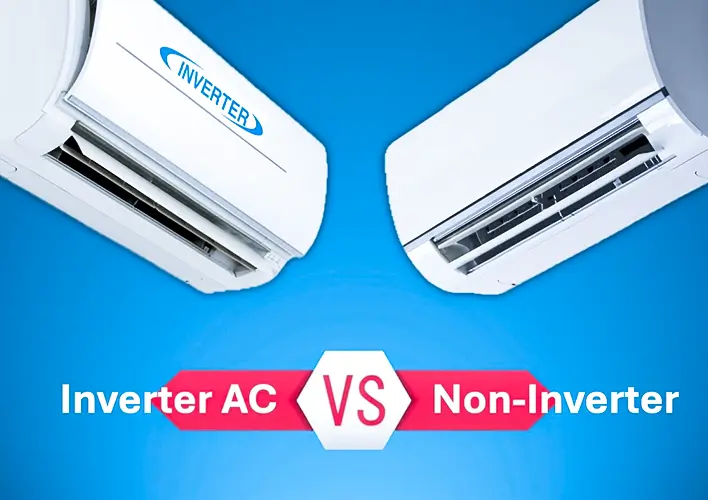
Inverter AC vs Non Inverter AC: Which Is Better for Your Home?
Choosing the right air conditioner can make a big difference in your electricity bills, indoor comfort, and long-term maintenance costs. When comparing inverter AC vs non inverter AC, many homeowners in Bangladesh want to know which option offers better cooling, consumes less electricity, and provides better value for money.
Both inverter and non-inverter air conditioners can cool a room effectively, but they work differently. An inverter AC adjusts its compressor speed according to the cooling demand, while a non-inverter AC generally operates its compressor at a fixed speed, switching it on and off to maintain the set temperature.
In this guide, we will explain the differences between inverter and non-inverter ACs, compare their electricity consumption, prices, advantages, and disadvantages, and help you choose the best option for your home or office.
What Is the Difference Between Inverter AC and Non Inverter AC?
The main difference between these two types of air conditioners is how their compressors operate.
An inverter AC uses variable-speed compressor technology. Once the room reaches the desired temperature, the compressor can slow down and continue running at a lower speed. This helps maintain a more consistent temperature and can reduce energy consumption.
A non-inverter AC typically uses a fixed-speed compressor. The compressor runs at full capacity when cooling is needed and switches off when the room reaches the target temperature. It starts again when the temperature rises.
The better option depends on your room size, daily usage, electricity costs, and budget.
Inverter AC vs Non Inverter AC: Comparison Table
Actual performance varies by model, energy efficiency rating, room conditions, and installation quality.
1. Electricity Consumption: Which AC Saves More Energy?
Electricity consumption is one of the biggest concerns for Bangladeshi households, especially during the summer months.
Inverter AC Electricity Consumption
An inverter AC can adjust its compressor speed according to the cooling requirement. After cooling the room, it can operate at a lower capacity instead of repeatedly stopping and restarting.
This can help reduce electricity consumption when the AC runs for several hours daily. However, the actual savings depend on the model, outdoor temperature, insulation, and temperature setting.
Non-Inverter AC Electricity Consumption
A non-inverter AC usually operates its compressor at a fixed speed. It switches off when the target temperature is reached and restarts when additional cooling is required.
Frequent starting and stopping can increase energy use compared with an efficient inverter model under similar conditions.
Winner: Inverter AC for many households that use air conditioning regularly for extended periods.
2. Inverter AC vs Non Inverter AC: Which Has a Lower Price?
The initial purchase price is another important consideration.
An inverter AC generally costs more because it uses more advanced compressor and electronic control technology. However, the higher upfront cost may be recovered over time through lower electricity bills if the unit is used frequently.
A non-inverter AC is often more affordable to purchase. It may be a practical choice for people who have a limited budget or only need cooling occasionally.
Before buying, compare the total cost of ownership, including the purchase price, electricity consumption, installation, and maintenance.
3. Cooling Performance: Which AC Cools Faster?
Both inverter and non-inverter ACs can provide effective cooling when their capacity is appropriate for the room.
An inverter AC can increase compressor output when more cooling is required and reduce it when the room becomes comfortable. This allows it to maintain a relatively stable indoor temperature.
A non-inverter AC generally runs at full compressor capacity whenever cooling is needed. It can also cool a room quickly if it has sufficient capacity, but the compressor cycles on and off to regulate the temperature.
Remember that cooling speed depends on more than compressor technology. Room size, sunlight exposure, ceiling height, insulation, and the AC's BTU capacity all matter.
4. Noise Level: Which AC Is Quieter?
Noise can affect your sleep, concentration, and overall comfort.
Inverter ACs often operate more quietly once the room reaches the desired temperature because the compressor can slow down instead of repeatedly switching off and restarting.
Non-inverter ACs may produce more noticeable changes in sound when the compressor starts and stops. However, noise levels vary between models, and indoor fan noise can also be significant.
If you are buying an AC for a bedroom, check the manufacturer's indoor noise specifications and look for a model with a suitable sleep mode.
5. Maintenance and Lifespan: Which Is Better?
Both inverter and non-inverter ACs require regular cleaning, inspection, and maintenance to operate efficiently.
Inverter ACs have electronic control components that can make certain repairs more expensive. Non-inverter ACs may have simpler control systems, although repair costs still depend on the specific fault and availability of parts.
Neither type is guaranteed to last longer in every situation. Proper installation, voltage protection where appropriate, clean filters, correct refrigerant levels, and timely servicing can all contribute to reliable performance.
For either type, neglecting maintenance may reduce cooling efficiency and increase operating costs.
6. Advantages and Disadvantages of Inverter AC
Advantages
Can reduce electricity consumption during extended use.
Maintains a more consistent room temperature.
Often operates quietly at lower compressor speeds.
Adjusts cooling output according to demand.
Can offer better long-term value for frequent users.
Disadvantages
Usually has a higher initial purchase price.
Some electronic components can be costly to repair.
Requires qualified technicians for complex repairs.
Energy savings are not guaranteed in every usage situation.
7. Advantages and Disadvantages of Non-Inverter AC
Advantages
Generally has a lower upfront purchase price.
Can provide effective cooling when correctly sized.
May have simpler compressor control systems.
Can be suitable for occasional use or smaller budgets.
Disadvantages
May consume more electricity during extended use.
Compressor cycling can create temperature fluctuations.
Starting and stopping may be more noticeable.
Frequent use can make its total long-term cost less attractive.
8. Which AC Is Best for Bangladesh?
The best choice depends on your lifestyle, budget, and electricity usage.
An inverter AC is often a good choice for bedrooms, family living rooms, and offices where cooling is needed for many hours each day. Its ability to adjust compressor speed can help manage electricity consumption and maintain comfortable temperatures.
A non-inverter AC may be suitable for a guest room, a shop with limited operating hours, or a household that prioritizes a lower purchase price.
Before making a decision, consider these factors:
Room size: Choose the correct cooling capacity for the space.
Daily usage: Consider how many hours the AC will operate.
Energy efficiency: Compare the available efficiency ratings.
Budget: Include purchase, installation, and operating costs.
Installation: Ensure the unit is installed by a qualified technician.
For the best results, avoid choosing an AC based on price alone. A properly sized, energy-efficient unit can provide better value over its lifetime.
9. Related Guide: Split AC vs Window AC
When choosing an air conditioner, you may also want to understand the difference between a split AC and a window AC.
A split AC has separate indoor and outdoor units and is commonly chosen for bedrooms and living spaces because of its design and indoor comfort features.
A window AC combines its main components in one unit and is generally installed in a suitable window or wall opening. It may be an option where installation space and budget are limited.
The right choice depends on your room layout, installation requirements, noise preferences, and budget. Remember that inverter technology and AC design are different considerations: some split and window models may use different compressor technologies depending on the product.
10. What Is AC Servicing?
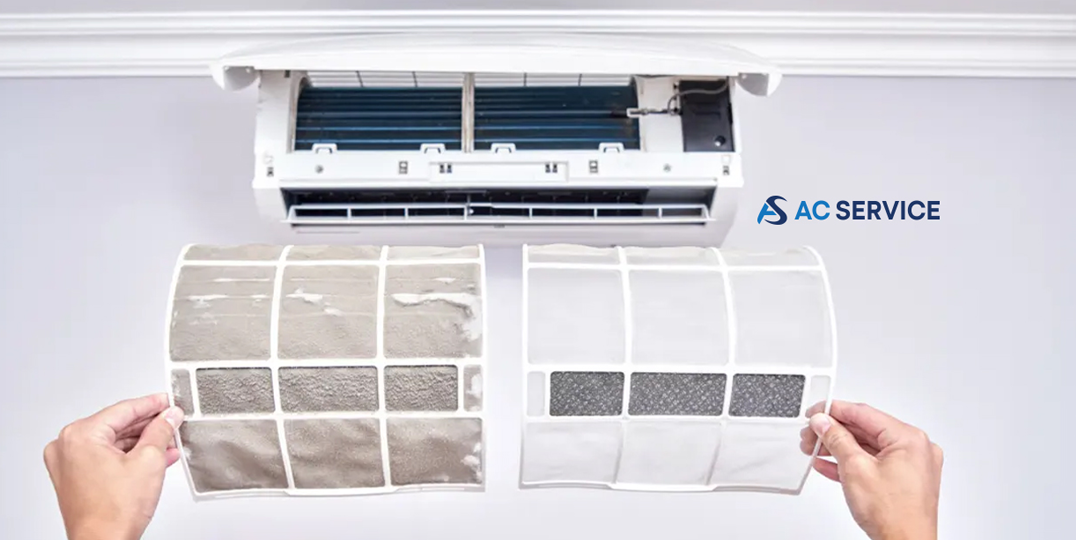
AC servicing is the process of inspecting, cleaning, and maintaining an air conditioner to help it operate safely and efficiently. Regular maintenance can include cleaning air filters, checking the indoor and outdoor units, inspecting electrical connections, and assessing cooling performance.
A dirty filter or blocked outdoor unit can restrict airflow and make an AC work harder. If the unit is not cooling properly, a qualified technician can investigate the cause rather than simply adding refrigerant without checking for a problem.
Regular AC maintenance is important for both inverter and non-inverter models. The appropriate service interval depends on usage, environmental conditions, and the manufacturer's recommendations.
11. Why Choose Professional AC Service BD?
Proper maintenance is essential for maintaining cooling performance and avoiding preventable problems. Whether you own an inverter or non-inverter model, professional AC Service BD can help you keep your air conditioner clean and operating efficiently.
When looking for AC Service in Bangladesh, choose a qualified service provider that can inspect your unit, identify cooling issues, and recommend appropriate maintenance.
A professional AC Service may include filter cleaning, coil inspection, drainage checks, electrical inspection, and performance testing, depending on the unit's condition and service requirements.
You should also use a suitable AC Service Product, such as an appropriate coil cleaner or cleaning accessory, only according to the manufacturer's instructions. Incorrect cleaning chemicals or improper handling can damage components.
Do not ignore warning signs such as unusual noise, water leakage, weak airflow, or unexpectedly high electricity bills. Early inspection can help identify problems before they become more serious.
For dependable maintenance, contact AC Service BD to discuss your air conditioner’s servicing requirements and keep your cooling system ready for Bangladesh's hot and humid weather.
Conclusion
When comparing inverter AC vs non inverter AC, there is no single option that is best for everyone. An inverter AC is generally a strong choice for regular use, improved temperature consistency, and potential electricity savings. A non-inverter AC can be a reasonable alternative for occasional cooling and lower upfront costs.
Before buying, compare energy efficiency, cooling capacity, installation requirements, and expected operating hours. Whichever model you choose, regular maintenance is essential for reliable performance.
For professional maintenance and cooling support, contact AC Service BD and make sure your air conditioner receives the care it needs for comfortable, efficient operation throughout the year.
For submit your comment, you need to login first.
All Categories
Recent Posts
Inverter AC vs Non Inverter AC: Which Is Better for Your Home?
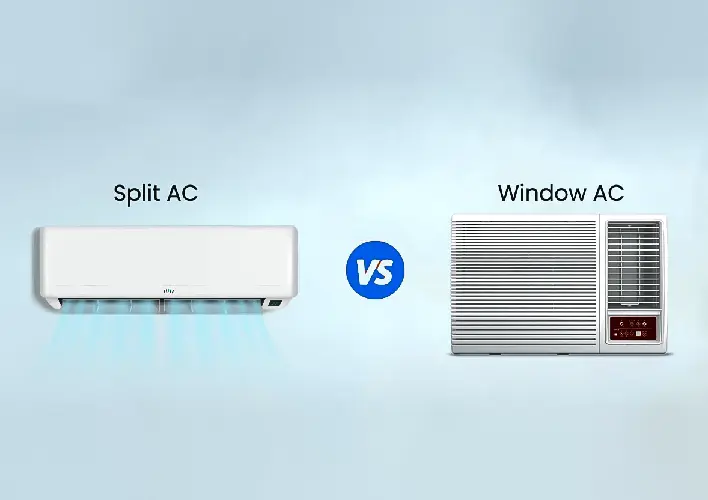
Split AC vs Window AC: Which One Is Better for Your Home?

What Is AC Servicing? A Complete Guide to AC Maintenance
How to Use Your Air Conditioner the Smart Way: Comfort, Savings, and Efficiency
Related Blogs
Discover more helpful articles and insights about AC services and maintenance in Bangladesh



00 Comments