
'%3e%3cpath%20d='M9.54052%2017.2194C8.37423%2015.2498%207.27109%2013.3834%206.16795%2011.5184C5.64062%2010.6275%205.09272%209.75045%204.5933%208.84415C3.78394%207.37776%204.1776%205.76364%205.51723%204.91273C6.80251%204.09568%208.35072%204.48343%209.21737%205.87597C9.88278%206.94538%2010.5144%208.0394%2011.1431%209.13343C11.337%209.47195%2011.4692%209.62582%2011.8511%209.31192C12.5855%208.70567%2013.4463%208.57026%2014.3365%208.87031C14.6376%208.97186%2014.7786%208.858%2014.9475%208.64258C15.7378%207.6301%2016.7293%207.27005%2017.9411%207.67011C18.2143%207.7609%2018.3642%207.65472%2018.5492%207.42392C19.8712%205.77288%2022.0643%205.89443%2023.0881%207.76397C24.557%2010.446%2026.0332%2013.1372%2027.2891%2015.9315C29.6232%2021.1262%2025.9319%2027.5503%2020.4617%2027.9827C18.9781%2028.0996%2017.6282%2027.6119%2016.3106%2026.9564C12.9425%2025.2807%209.56403%2023.6281%206.19292%2021.9602C5.60977%2021.6724%205.10741%2021.277%204.77691%2020.6738C3.97049%2019.2012%204.46844%2017.7979%205.98434%2017.2871C6.96996%2016.9516%208.20971%2016.9132%209.54052%2017.2194ZM19.8389%2026.5071C24.4263%2026.5501%2027.978%2021.1323%2026.2271%2016.8147C25.0241%2013.8496%2023.3246%2011.143%2021.8748%208.30406C21.5928%207.75012%2021.0699%207.52239%2020.5073%207.60395C19.9168%207.69011%2019.5055%208.07479%2019.3292%208.71644C19.0575%209.6966%2018.7387%209.80431%2017.925%209.23652C16.979%208.57488%2016.036%208.92878%2015.6981%2010.072C15.4293%2010.9799%2015.065%2011.1061%2014.3203%2010.5506C13.4581%209.9074%2012.6179%2010.1213%2012.1449%2011.1061C11.666%2012.1016%2011.2165%2012.1478%2010.6569%2011.2245C9.79758%209.79815%208.96472%208.3533%208.11423%206.9223C7.55899%205.9883%206.76873%205.76518%206.024%206.3222C5.33362%206.8392%205.27633%207.66549%205.89474%208.71644C6.8407%2010.3259%207.80723%2011.9216%208.75907%2013.5265C9.74911%2015.1975%2010.7289%2016.8747%2011.7218%2018.5442C11.9333%2018.8997%2012.0479%2019.2397%2011.7424%2019.589C11.4075%2019.9706%2011.0535%2019.866%2010.6892%2019.6244C10.3793%2019.4197%2010.0399%2019.2613%209.74617%2019.0366C8.76936%2018.2888%207.7%2018.318%206.59834%2018.5873C6.28693%2018.6627%205.87417%2018.6119%205.8022%2019.0889C5.73169%2019.5536%205.88592%2019.9598%206.2223%2020.2583C6.44263%2020.4538%206.70116%2020.6153%206.96409%2020.7446C10.2882%2022.3972%2013.6138%2024.0497%2016.9481%2025.6808C17.897%2026.147%2018.8709%2026.5701%2019.8389%2026.5071Z'%20fill='white'/%3e%3cpath%20d='M6.67515%207.29996e-07C9.71428%20-0.00153799%2012.5522%202.42963%2013.1309%205.53784C13.2146%205.98714%2013.2323%206.46876%2012.7005%206.60417C12.1747%206.73803%2011.9132%206.43337%2011.803%205.87482C11.0921%202.30192%207.71218%200.812442%205.20038%201.62335C3.0984%202.30192%201.58985%204.1653%201.40623%206.38875C1.21381%208.70913%202.33898%2010.8141%204.3352%2011.8604C4.48797%2011.9404%204.64661%2012.0066%204.79937%2012.0866C5.18275%2012.2882%205.49856%2012.5928%205.27676%2013.0498C5.07846%2013.4576%204.71271%2013.6346%204.22504%2013.4238C1.92181%2012.4236%200.485239%2010.651%200.0901074%208.08595C-0.5753%203.76216%202.527%200.00307816%206.67515%207.29996e-07Z'%20fill='white'/%3e%3c/g%3e%3cdefs%3e%3cclipPath%20id='clip0_7851_14008'%3e%3crect%20width='28'%20height='28'%20fill='white'/%3e%3c/clipPath%3e%3c/defs%3e%3c/svg%3e)
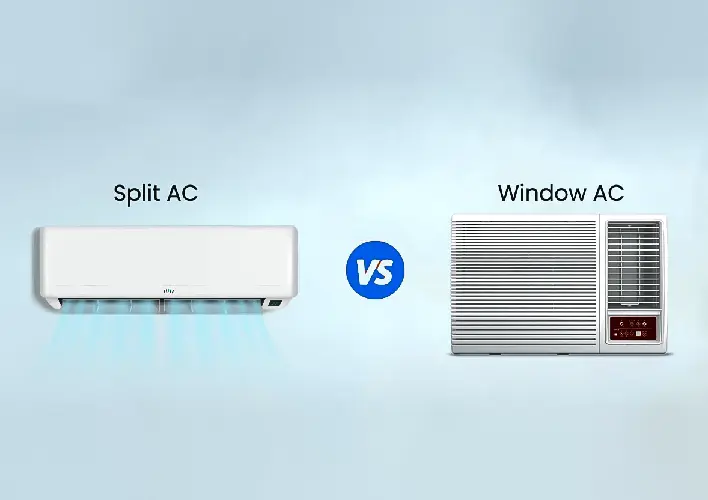
Split AC vs Window AC: Which One Is Better for Your Home?
Choosing the right air conditioner can make a significant difference in indoor comfort, electricity consumption, maintenance, and long-term convenience. Two of the most common options for homes, offices, and small commercial spaces are split AC and window AC.
But when comparing Split AC vs Window AC, which one is the right choice for you?
Both types can provide effective cooling, but they differ in design, installation, noise level, energy efficiency, maintenance, appearance, and cost. The right choice depends on your room size, budget, available installation space, and how you plan to use the AC.
What Is a Split AC?
A split AC consists of two main units: an indoor unit and an outdoor unit. The indoor unit is installed inside the room, while the outdoor unit is placed outside the building.
These two units work together through refrigerant piping and electrical connections. The indoor unit distributes cool air into the room, while the outdoor unit releases the heat removed from the indoor space.
Split ACs are widely used in bedrooms, living rooms, offices, restaurants, shops, and other commercial spaces. They are available in different capacities, making them suitable for a variety of room sizes.
One of the major advantages of a split AC is quieter indoor operation. Since the compressor is located in the outdoor unit, less mechanical noise is produced inside the room.
What Is a Window AC?
A window AC is a single-unit air conditioner designed to be installed in a suitable window or wall opening. Unlike a split AC, the major cooling components are housed within one unit.
The front portion of the unit remains inside the room and distributes cool air, while the rear portion extends outside to release heat.
Window ACs can be a practical choice for smaller rooms where installing a separate outdoor unit is difficult or unnecessary. They can also have a lower initial purchase and installation cost compared with some split AC systems.
Split AC vs Window AC: Quick Comparison
These are broad differences. The actual performance and efficiency of an AC depend on the individual model, capacity, energy rating, technology, installation quality, and usage conditions.
Split AC vs Window AC: Key Differences
1. Installation
Installation is one of the most noticeable differences between the two types.
A split AC requires installation of both indoor and outdoor units. It also needs refrigerant piping, electrical connections, and proper positioning of the outdoor unit.
A window AC generally has a simpler installation process because the complete system is contained in one unit. However, a suitable window or wall opening is required.
2. Cooling Performance
Both split and window ACs can provide effective cooling when they are correctly sized for the room.
Split ACs generally offer greater flexibility in terms of capacity and airflow distribution. They can also be installed in locations where a window-mounted unit may not be practical.
For medium or larger rooms, a properly sized split AC can provide comfortable and consistent cooling.
3. Energy Efficiency
Energy efficiency depends on the specific model, cooling capacity, inverter technology, energy rating, room conditions, and usage habits.
Modern inverter split ACs can adjust compressor operation according to cooling demand, which can help reduce unnecessary energy consumption during extended operation.
However, energy-efficient window AC models are also available. Therefore, consumers should compare the actual energy ratings and specifications instead of assuming that one AC type will always consume less electricity.
4. Noise Level
Noise is an important factor, especially when choosing an AC for a bedroom, study room, or office.
Split ACs generally operate more quietly indoors because the compressor is located in the outdoor unit. In a window AC, the main components are housed within the same unit, so more operational noise can be heard inside the room.
If quiet operation is a priority, this difference may be worth considering.
5. Space Requirements
A split AC requires space for both the indoor and outdoor units. The outdoor unit also needs a suitable location with sufficient airflow.
A window AC requires a suitable window or wall opening and occupies part of that space.
Therefore, you should consider the available installation area before choosing between the two.
6. Maintenance and Servicing
Both split and window ACs require regular cleaning and maintenance.
Split AC servicing may include cleaning the indoor filter, evaporator coil, blower, drain system, and outdoor condenser unit. Window AC maintenance may involve cleaning the filter, coils, drainage system, and other accessible components.
Regular AC Service can help maintain cooling performance and identify potential problems before they become more serious.
7. Initial Cost
The initial cost depends on the brand, capacity, technology, and specific model.
Window ACs can often be more economical when purchase and basic installation costs are considered. Split ACs may require a higher installation budget because they have separate indoor and outdoor units and require additional installation work.
However, the lowest initial price may not always be the most suitable option for your specific room or usage pattern.
8. Appearance and Design
Split ACs generally have a modern and minimal appearance. The indoor unit can be mounted high on a wall without occupying a window.
Window ACs are more noticeable because the unit occupies part of a window or wall opening.
For homeowners who care about interior appearance, this design difference may influence the final decision.
Split AC vs Window AC: Pros and Cons
Advantages of Split AC
- Generally quieter indoor operation
- Modern and attractive design
- Flexible installation options
- Available in different capacities
- Suitable for many medium and large rooms
- Compressor is positioned outside the room
Disadvantages of Split AC
- Installation can be more complicated
- Requires space for an outdoor unit
- Installation may cost more
- Refrigerant piping and electrical connections require proper installation
Advantages of Window AC
- Simpler installation
- Often lower initial cost
- Suitable for smaller rooms
- Major components are integrated into one unit
- Convenient where separate outdoor-unit installation is difficult
Disadvantages of Window AC
- Can produce more indoor noise
- Requires a suitable window or wall opening
- Occupies part of the window area
- May be less suitable for larger spaces
Which Is More Energy Efficient: Split AC or Window AC?
There is no universal answer because electricity consumption depends heavily on the specific model and how it is used.
When comparing ACs, consider the energy efficiency rating, cooling capacity, inverter technology, and expected power consumption. An appropriately sized inverter AC may operate more efficiently during long periods of use.
Room insulation, sunlight exposure, temperature settings, door and window usage, and regular maintenance can also influence electricity consumption.
Therefore, instead of choosing based only on the type of AC, compare the specifications and efficiency ratings of the actual models you are considering.
Which AC Is Better for Different Room Sizes?
The appropriate AC depends on room size as well as factors such as ceiling height, sunlight exposure, number of occupants, and insulation.
For a small room, a properly sized window AC can be a practical choice, particularly when installation simplicity and budget are important.
For medium or larger bedrooms, living rooms, offices, or commercial spaces, a split AC may provide greater flexibility and comfortable airflow.
The AC capacity should always be selected according to the actual cooling requirement rather than simply choosing the largest available unit.
Split AC vs Window AC: Which One Should You Choose?
The right choice ultimately depends on your specific requirements.
If your priority is lower initial cost and simpler installation, a window AC may be suitable.
If you want quieter operation, modern design, and greater installation flexibility, a split AC may be more appropriate.
For frequent, long-hour usage, compare energy ratings and inverter options carefully. If interior appearance is important, split ACs generally offer a cleaner-looking installation.
There is no single AC type that is ideal for every home. Room size, budget, installation space, energy efficiency, and usage patterns should all be considered before making a purchase.
AC Servicing and Maintenance
Regardless of whether you choose a split AC or window AC, regular maintenance is important for keeping the system operating properly.
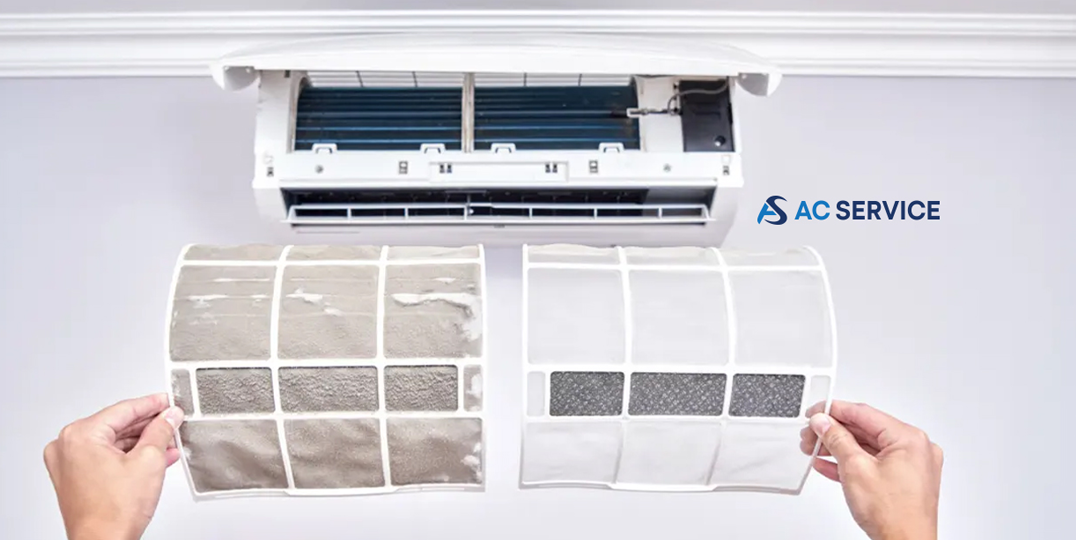
Filters should be cleaned regularly, while coils, drainage systems, electrical components, and other parts should be inspected when necessary. Dirt accumulation can restrict airflow and affect cooling performance.
Professional technicians can also identify problems that may not be visible during basic cleaning.
If you are purchasing cleaning equipment or an AC Service Product, make sure it is suitable for the specific AC model and intended application. More technical maintenance tasks should be handled by trained professionals.
Conclusion
When comparing Split AC vs Window AC, both options have their own advantages and limitations. Window ACs can be practical for smaller rooms, simpler installation, and lower initial investment, while split ACs can offer quieter operation, modern design, and greater installation flexibility.
The right choice depends on your room size, budget, installation space, energy-efficiency requirements, and preferred comfort level.
Whichever type you choose, regular maintenance and professional servicing can help maintain cooling performance and support the long-term reliability of your air conditioner.
Looking for AC Service in Bangladesh?
Bangladesh's hot and humid climate means air conditioners are often used for long hours, particularly during the warmer months. Dust, humidity, and frequent usage can affect filters, coils, drainage systems, and overall cooling performance.
If your AC is not cooling properly, making unusual sounds, leaking water, or consuming more electricity than usual, professional inspection can help identify the underlying issue.
For homeowners, offices, shops, and commercial spaces looking for reliable AC Service in Bangladesh, choosing an experienced service provider can make routine maintenance easier and help keep your air conditioner working efficiently.
Need professional AC servicing or repair? Contact AC Service BD today to schedule a service and keep your AC ready for comfortable cooling throughout the year.
For submit your comment, you need to login first.
All Categories
Recent Posts
Split AC vs Window AC: Which One Is Better for Your Home?

What Is AC Servicing? A Complete Guide to AC Maintenance

How to Use Your Air Conditioner the Smart Way: Comfort, Savings, and Efficiency

How to do AC installation?
Related Blogs
Discover more helpful articles and insights about AC services and maintenance in Bangladesh


00 Comments